What Zuri AI is, what it costs, and what it cannot do
Zuri AI by Aravi AI turns one phone photo of a kurti into catalogue images. What it actually does, what a photo costs, what it gets wrong, and which sellers should not buy it.
18 August 2026 · 4 min read · Zuri AI by Aravi AI
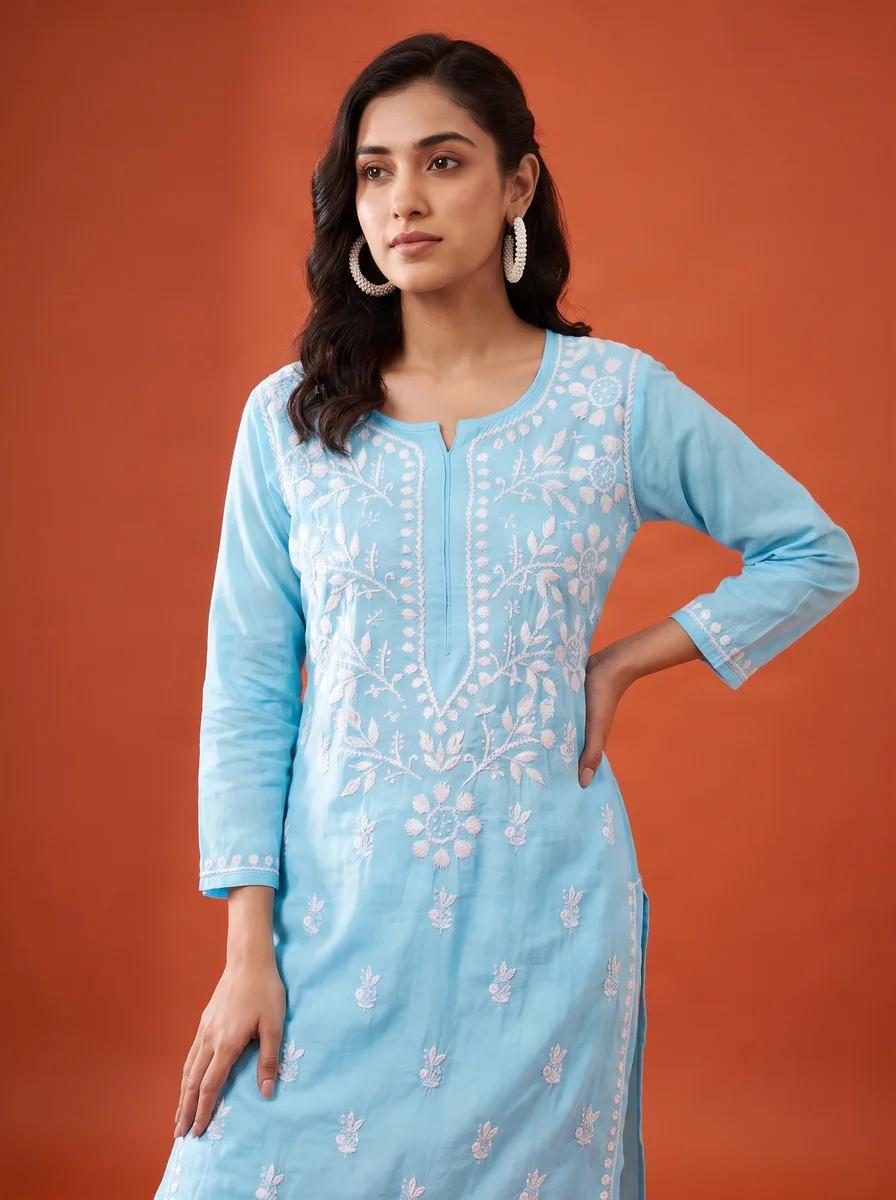
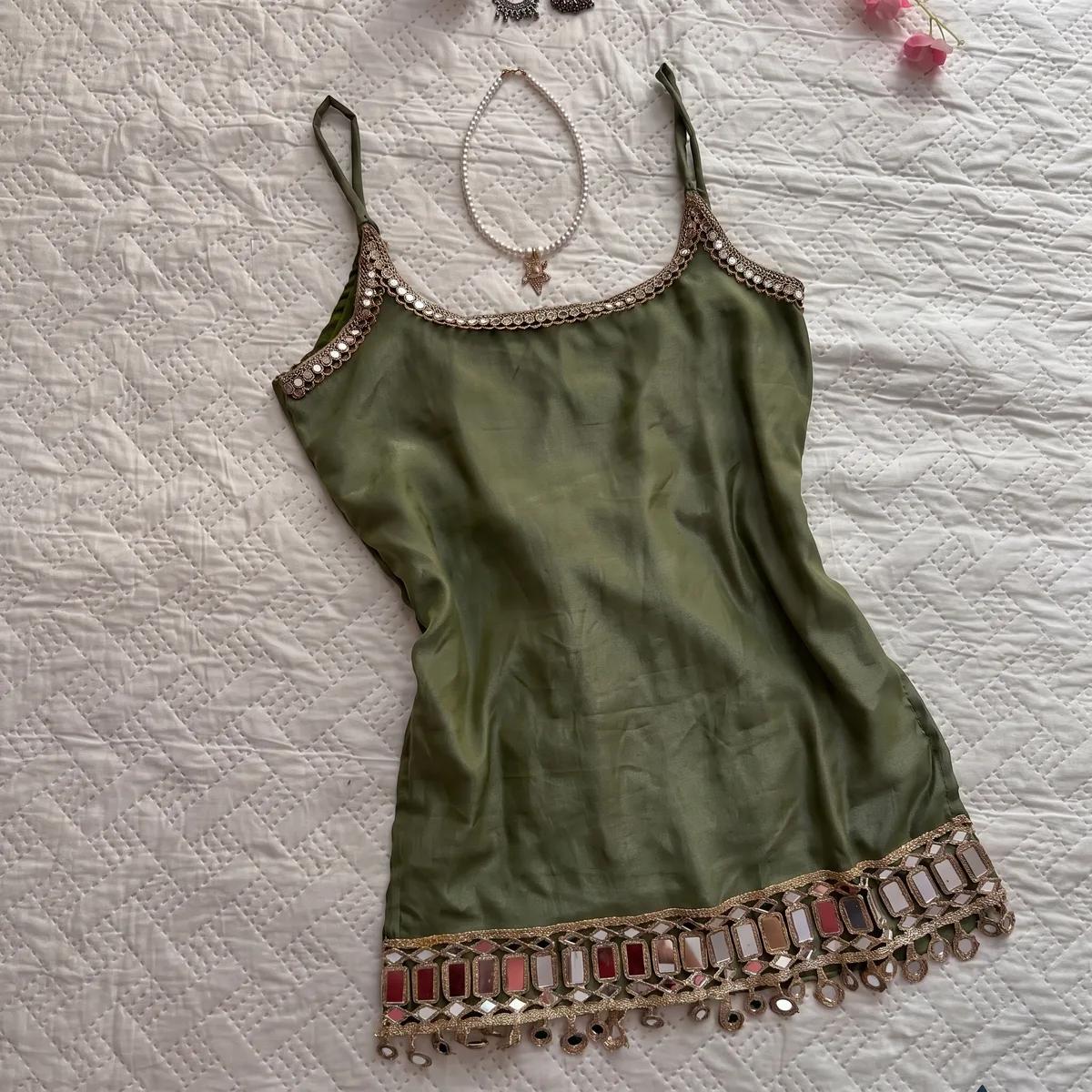
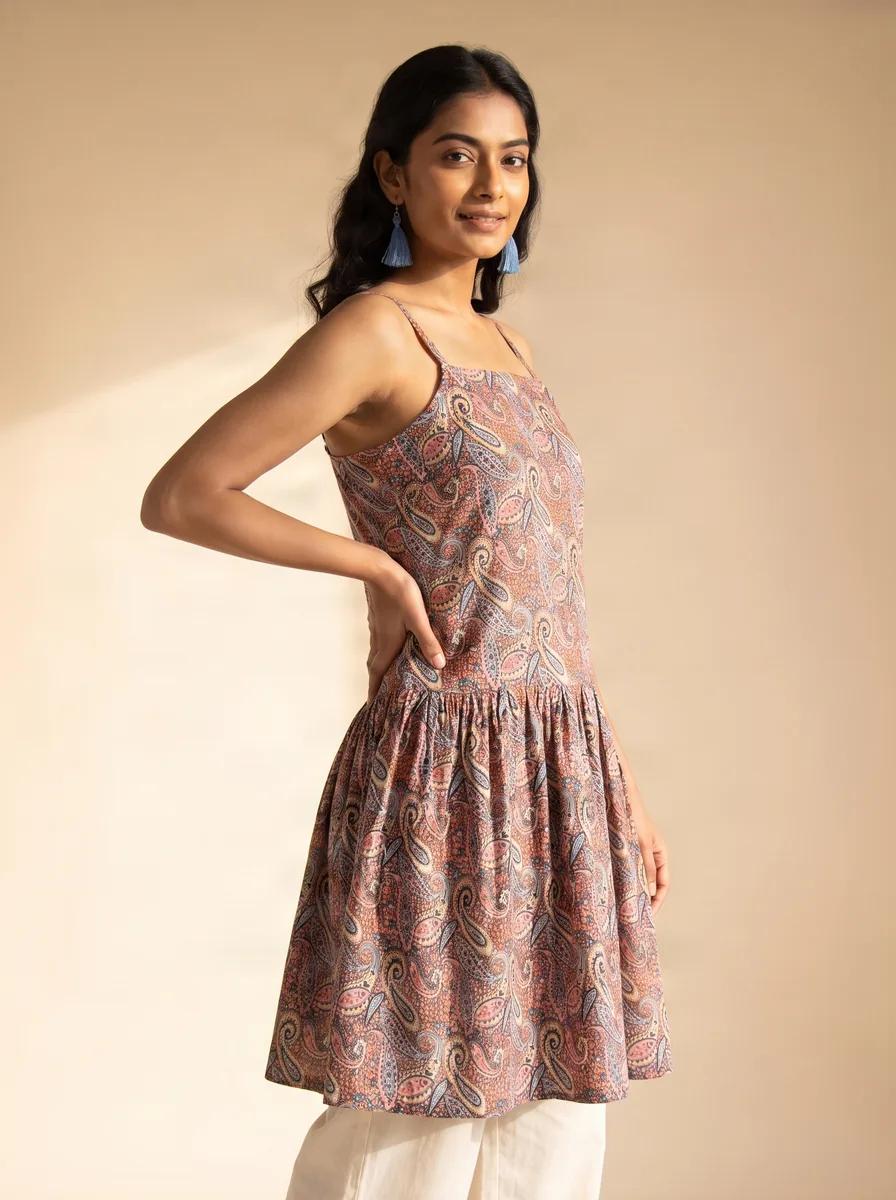
Zuri AI is an AI product-photography tool for Indian ethnic-wear sellers. You upload one photograph of a kurti — taken on a phone, flat on a bed is fine — and it returns a set of catalogue images: the garment on a model, a clean studio shot on plain backdrop, styled flat-lays, and close-ups of the embroidery and neckline.
It is built by Aravi Tech Labs Private Limited, which also builds Aravi AI, a brand-context layer for AI tools. This post is written by the people who make it, so read it as such — but we have tried to make it the version we would want to read before paying for something.
What it actually does
The important technical detail, because it is what separates useful tools in this category from useless ones: this is image-to-image generation, not text-to-image. It is not producing a picture of "a blue kurti" from a description — that would invent a garment you do not sell and cannot ship. Your photograph is the input, and the work is re-rendering the same fabric, print and embellishment onto a model in a new setting.
So the print on the output is meant to be the print you uploaded. Block print, ajrakh, chikankari, mirror work, embroidery — carried across rather than reimagined. When that fails, it is a bug, not a feature.
What you can upload
- Flat on a bed or table, shot straight down — the most common seller photo and the one that works best
- On a hanger against a plain wall
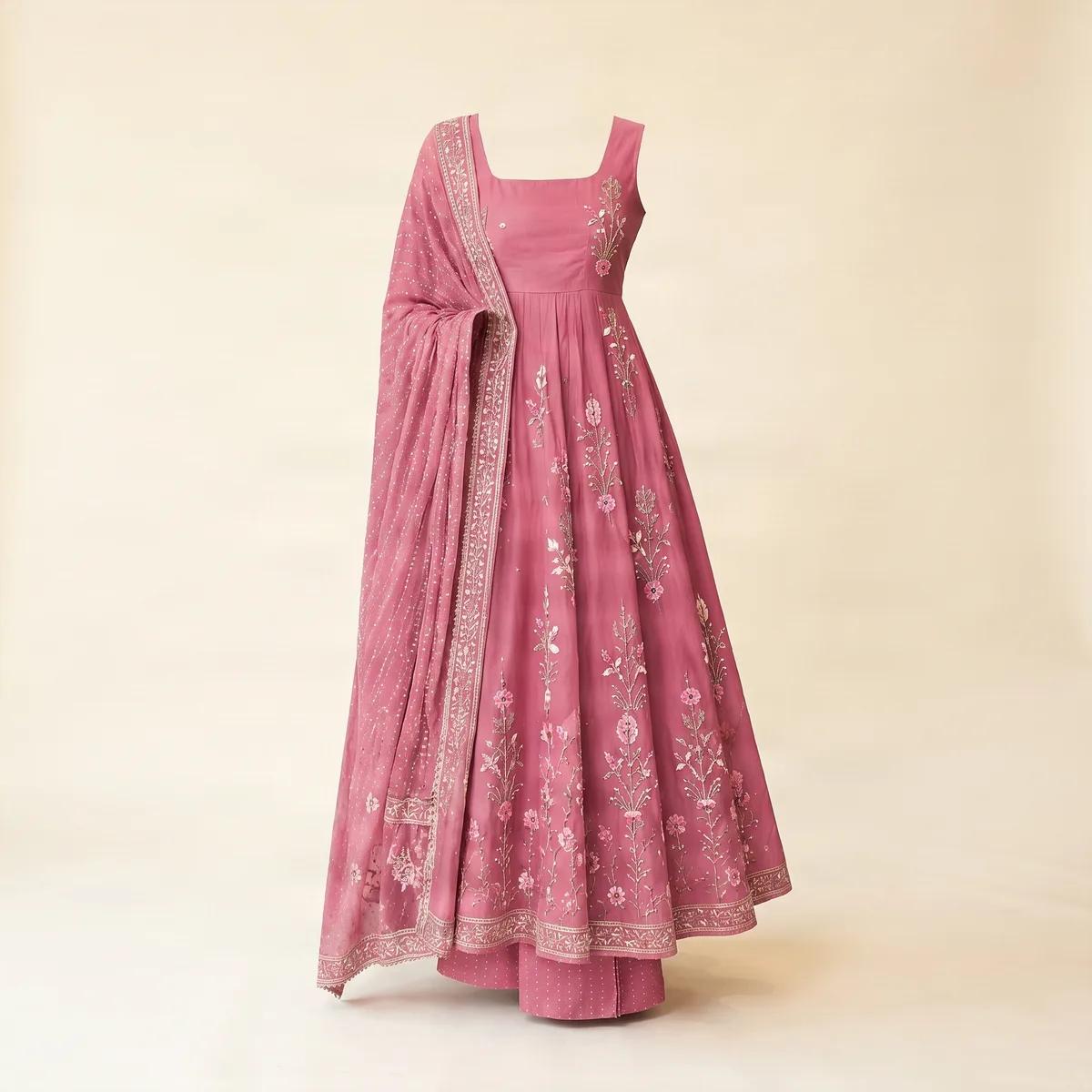
- On a mannequin
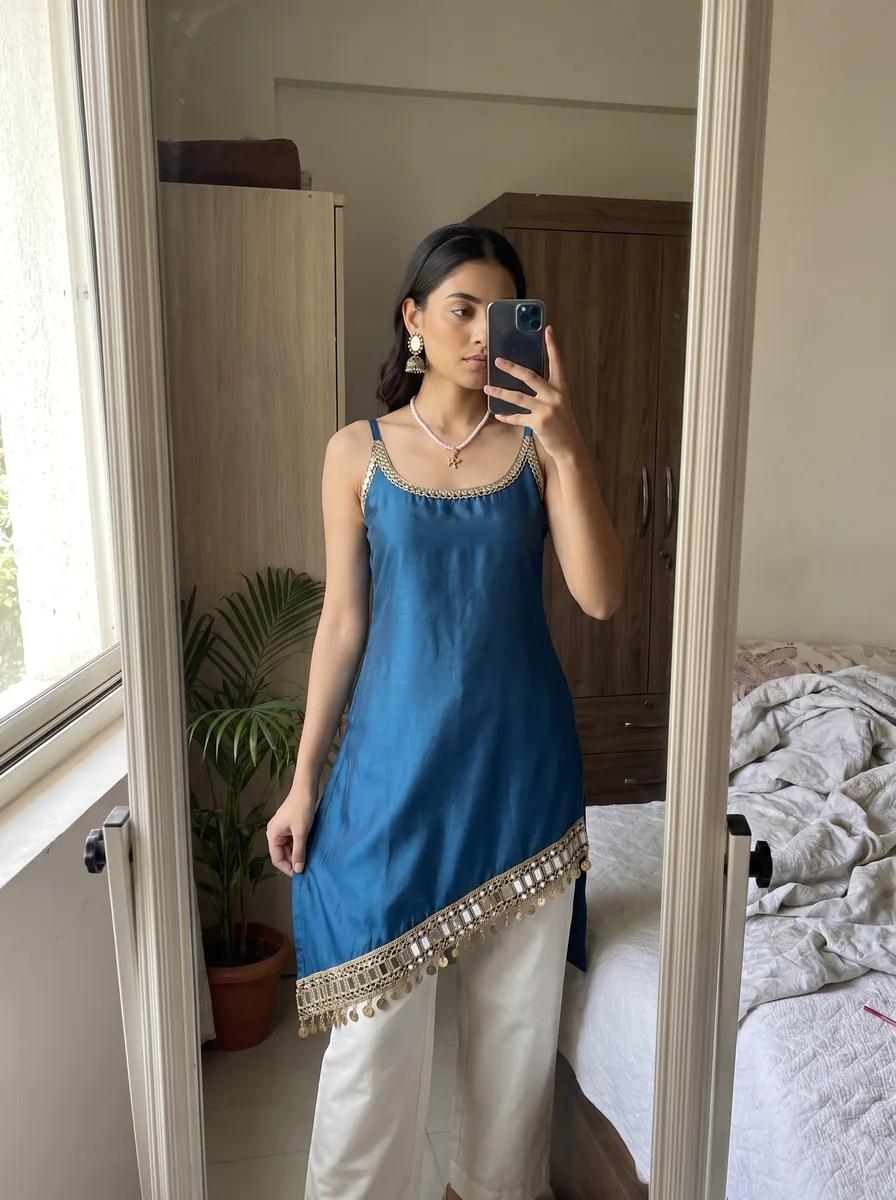
- Folded on a stack, or a phone mirror selfie, as long as the print is legible
What comes back
- Clean studio — e-commerce ready, plain backdrop, the shot Meesho and Flipkart want as a primary image
- On-model front and three-quarter — what Myntra requires for apparel
- Detail macros of embroidery, weave and neckline
- Styled flat-lay with props and dupatta
- Scene styles: festive, garden daylight, night editorial, heritage plaster, boutique, mirror selfie
Downloads are available at HD, 2K or 4K, and a finished photo can be cropped to each marketplace's aspect ratio before you publish — which matters more than it sounds, because Meesho wants square and Myntra wants a 3:4 portrait of the same garment.
What it costs
Pricing is in credits. An HD photo costs 10 credits, 2K costs 15, 4K costs 20. Plans are monthly buckets of credits, and paying annually is nine months' price for twelve.
| Plan | Per month | Credits | ≈ HD photos | ≈ Cost per HD photo |
|---|---|---|---|---|
| Starter | ₹399 | 80 | 8 | ₹50 |
| Growth | ₹799 | 220 | 22 | ₹36 |
| Pro | ₹1,799 | 550 | 55 | ₹33 |
| Max | ₹5,999 | 2,000 | 200 | ₹30 |
Scroll the table sideways to see every column →
There are 20 free credits on signup with no card required, which is two HD photos — enough to judge whether it handles your fabric before paying anything. That is the honest reason the free tier is small: it exists to answer one question, not to be a free plan.
What it cannot do
This is the section most product pages leave out, and it is the one that saves both of us a refund conversation.
- It cannot verify fit. No human has worn the garment. If the sleeve is short or the fall is wrong, the image will not tell you — it will render the garment as photographed, on a figure it was never on.
- It is better at simple silhouettes than heavily structured ones. A straight kurti or an A-line reproduces more reliably than a sharply tailored jacket or a stiff, layered lehenga.
- It cannot invent detail your photo does not contain. A blurred print stays blurred. Legibility of the input is the ceiling on the output.
- It is not a substitute for photographing a hero product. If one design carries your season, shoot it properly at least once.
- Marketplace policy on AI-assisted imagery is moving. Check your platform's current rules before building an entire catalogue on generated images.
Who should not buy this
- Sellers with fewer than about five designs a month. At that volume a per-photo studio at ₹49–₹69 an image is cheaper and gives you a real photograph.
- Anyone whose product is fit and tailoring rather than fabric and print. The thing you are selling is the thing this cannot show.
- Sellers who need a guarantee that images depict the physical item as shipped, for regulatory or platform reasons.
- Anyone hoping to skip photography entirely. You still have to take a decent photo of the kurti; the tool starts there.
How it compares to the alternatives
| Per-photo studio | Full-day model shoot | Zuri AI | |
|---|---|---|---|
| Cost per image | ₹49–₹69 | ₹1,000+ per design at 40 designs | ₹30–₹50 |
| On-model images | No | Yes | Yes |
| Turnaround | 1–3 weeks incl. courier | Booked in advance | Minutes |
| Send your stock away | Yes | Yes | No |
| Verifies real fit | Partly | Yes | No |
| Cost to try one design | Courier + minimum | A day's booking | Free — 20 credits |
Scroll the table sideways to see every column →
The case for it is narrow and specific: you add designs faster than you can book studios, you cannot part with stock for two weeks, and you need on-model images at a per-image price. If that is not you, one of the other columns is the better buy, and we would rather you picked it than churned in month two.
Questions people ask
Read next
What a kurti photoshoot actually costs in India in 2026
Per-photo rates, per-piece quotes, full-day shoots and AI — the four ways ethnic-wear sellers pay for catalogue images, and the costs each one hides.
One kurti, four marketplaces, four different photos
Meesho wants square on white. Myntra rejects square and demands a model. Selling on both means two different photos of the same kurti — here is the full comparison.